5 Myths About Women's Strength: Strength Changes More Than Your Muscles
There’s something we witness over and over inside the Studio.
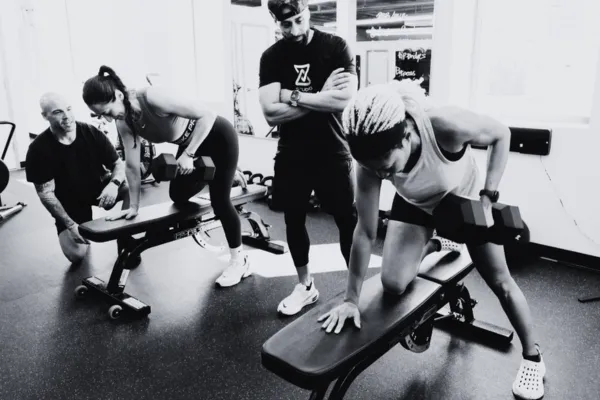
A woman walks in unsure.
She hesitates before picking up the heavier weight.
She surprises herself.
She smiles.
That moment, that realization changes posture, energy, and confidence.
Strength training teaches patience, consistency, resilience, and self-trust. It reminds women that they are capable of growth at any age.
And perhaps most importantly? It’s more sustainable than chasing quick-fix weight loss trends.
5 Myths About Women’s Strength
It’s Women’s History Month and at the Studio we love to celebrate women. We have amazing women trainers like Co-owner Lisa, Head Coach Melissa, Coaches Julia, Drea, and Wendy, and Yoga Teachers Alison, Stacey and Maria. And we can’t forget our hundreds of women clients of all different ages, backgrounds, and fitness levels who come to Studio in the Heights to feel strong, resilient, capable and powerful.
We strive to help all women reach their potential when it comes to fitness and strength - but we can’t help but notice how many myths surround strength training for women, and how those myths have such a negative impact on the women in our Studio and beyond.
We’ve heard it all, but some of the the worst and most-often-repeated are:
“If I lift, I’ll get bulky.”
“I’m too old to lift.”
“I do cardio and take yoga classes, that’s all I need.”
“I just want to focus on losing weight.”
It’s so frustrating, because we know you want to be strong. You want to feel as powerful as you feel when you hear the opening notes of Shania Twain’s “Man, I Feel Like a Woman” and know in that moment you could kick through a wall like the Kool Aid man.
These myths are dangerous because they’re holding you back. So in order to help you best your best, strongest, most confident self, we’re going to bust those myths for you. Read on, friend.
Myth #1: Lifting Weights Will Make Women Bulky
Truth: Strength training builds lean muscle, not bulk.
One of the most persistent fears around strength training is the idea that women will suddenly develop large, bodybuilder-style muscles.
The reality? Women produce significantly less testosterone than men — about 10–20 times less — which makes it physiologically difficult to gain large amounts of muscle mass without extremely specific training and nutrition.
Instead, what most women experience is increased muscle tone (so you can lift your kids without running out of breath), improved body composition (so you can toss on last summer’s outfit without fearing that it won’t fit), and greater metabolic efficiency (so you can eat that snack without undoing all the hard work you usually do with your nutrition).
Research published by the American College of Sports Medicine shows that women who engage in resistance training gain strength and lean mass without significant increases in muscle size.
In plain English, this means you get stronger, firmer, and more metabolically healthy — not bulky.
Myth #2: Cardio Is More Important Than Strength Training
Truth: Strength training is critical for long-term health, especially as we age.
Cardio is fantastic for heart health. We love it, and recommend you include it in your fitness plan. But strength training is what protects your future.
After age 30, women naturally begin losing muscle mass, a process called sarcopenia. Without intervention, muscle loss accelerates with age, impacting metabolism, balance, and independence.
According to the National Institute on Aging (NIA), “resistance training can help prevent loss of muscle mass and strength, reduce risk of falls, and support bone density as we age.”
Even more compelling, strength training has been shown to:
Improve insulin sensitivity, which is how effectively your body uses glucose for energy
Reduce visceral fat, the fat surrounding your organs
Support joint stability to reduce pain and prevent injuries
Improve balance and coordination to prevent falls
The important thing to remember here is this: Cardio supports your heart. Strength training supports everything else.
Myth #3: Strength Training Isn’t Safe for Older Women
Truth: It’s one of the safest and most protective things you can do.
This one especially matters.
Many women over 50 believe they should avoid lifting weights to protect their joints or prevent injury. In fact, the opposite is true when done properly.
The Centers for Disease Control and Prevention (CDC) recommends muscle-strengthening activities at least twice per week for adults, including older adults.
Strength training improves bone mineral density, reduces osteoporosis risk - especially important for aging women, protects joints by strengthening surrounding muscles, and reduces the risk of falls.
A 2017 meta-analysis in Osteoporosis International found that resistance training significantly improved bone density in postmenopausal women.
Stronger muscles = stronger bones = more confidence in daily life.
And when guided by qualified coaches (like at Studio in the Heights), strength training becomes empowering, not intimidating.
Myth #4: Strength Training Is Just About Appearance
Truth: Strength training dramatically impacts mental health.
Yes, strength training can change your body composition. But what it does for your brain is just as powerful.
Worried about cognitive decline as you age? Strength training can even make your brain stronger. Yes, really. When you do new things in the Studio, your brain has to learn how to do something new. New neural pathways are formed, and the mind-muscle connection is improved. This is called neuroplasticity.
Additionally, resistance training has been shown to reduce symptoms of anxiety, reduce symptoms of depression, improve cognitive function and enhance mood regulation. And it’s not just because exercise like strength training releases endorphins, the happy chemical in your brain.
Meta analysis from JAMA psychiatry looked at 33 studies and across all studies, weight training benefited mood:
“Across all studies, weight training benefitted mood. People who were depressed before the study showed improvement. Those not depressed were less likely to become depressed than people who did not do weight training. The number of work-outs or repetitions, or whether people gained muscle strength made no difference. Simply completing the workout helped combat depression.”
There is something uniquely empowering about lifting something heavy and realizing “I can do hard things.” That confidence carries into careers, relationships, parenting, and leadership.
Strength is psychological, not just physical.
Myth #5: It’s Too Late to Start
Truth: It is never too late to build strength.
This might be the most important truth of all.
Research shows that even individuals in their 70s, 80s, and beyond can significantly improve muscle mass and strength through resistance training.
The body is adaptable. Always.
At Studio in the Heights, we see women start strength training in their 40s, 50s and experience support as they manage symptoms through perimenopause, menopause and post-menopause. Women in their 60s and 70s work on bone density and balance in addition to:
Increased energy
Improved posture
Reduced back pain
Better metabolic health
Greater independence
Strength doesn’t have an expiration date.
If You’re Not Strength Training Yet…
Here’s how to start safely and effectively. Begin with 2–3 sessions per week and focus on the six primal movement patterns (squat, lunge, push, pull, bend, twist). Prioritize form over load and progress gradually. Seek guidance from qualified professionals (that’s us).
And remember: you don’t need to feel “ready.” You just need to begin.
The Science-Backed Benefits of Strength Training for Women
Let’s zoom out and look at the bigger picture. According to research from the American College of Sports Medicine (ACSM) and the National Institute on Aging, consistent strength training can:
✔ Preserve lean muscle mass
✔ Improve resting metabolic rate
✔ Reduce risk of Type 2 diabetes
✔ Lower blood pressure
✔ Improve bone density
✔ Reduce fall risk by up to 34%
✔ Improve functional independence in later life
And importantly for women:
After menopause, declining estrogen levels accelerate bone density loss. Strength training is one of the most effective non-pharmaceutical ways to combat that decline.
Sometimes it’s about aesthetics. And sometimes it’s about making sure you can get off the floor unassisted if you fall down.
The Bigger Picture: Community Makes Strength Stick
Strength training can feel intimidating alone. That’s why community matters.
Research consistently shows that social support increases exercise adherence. Accountability improves consistency. And consistency builds results.
At Studio in the Heights, strength isn’t about ego. It’s about empowerment. Our coaches meet you where you are. Our community celebrates progress, not perfection. It’s one of the reasons our Shared Personal Training sessions are so popular - because you have support and accountability not just from your coach but from your community as well.
You don’t have to lift alone. You don’t have to figure it out alone. And you are far more capable than you think.
Feel inspired and want to get started? Check out our Trial Offer.
